7 Mistakes You're Making with Stage Presence (and How to Fix Them Before Your Next Audition)
7 Mistakes You're Making with Stage Presence (and How to Fix Them Before Your Next Audition)
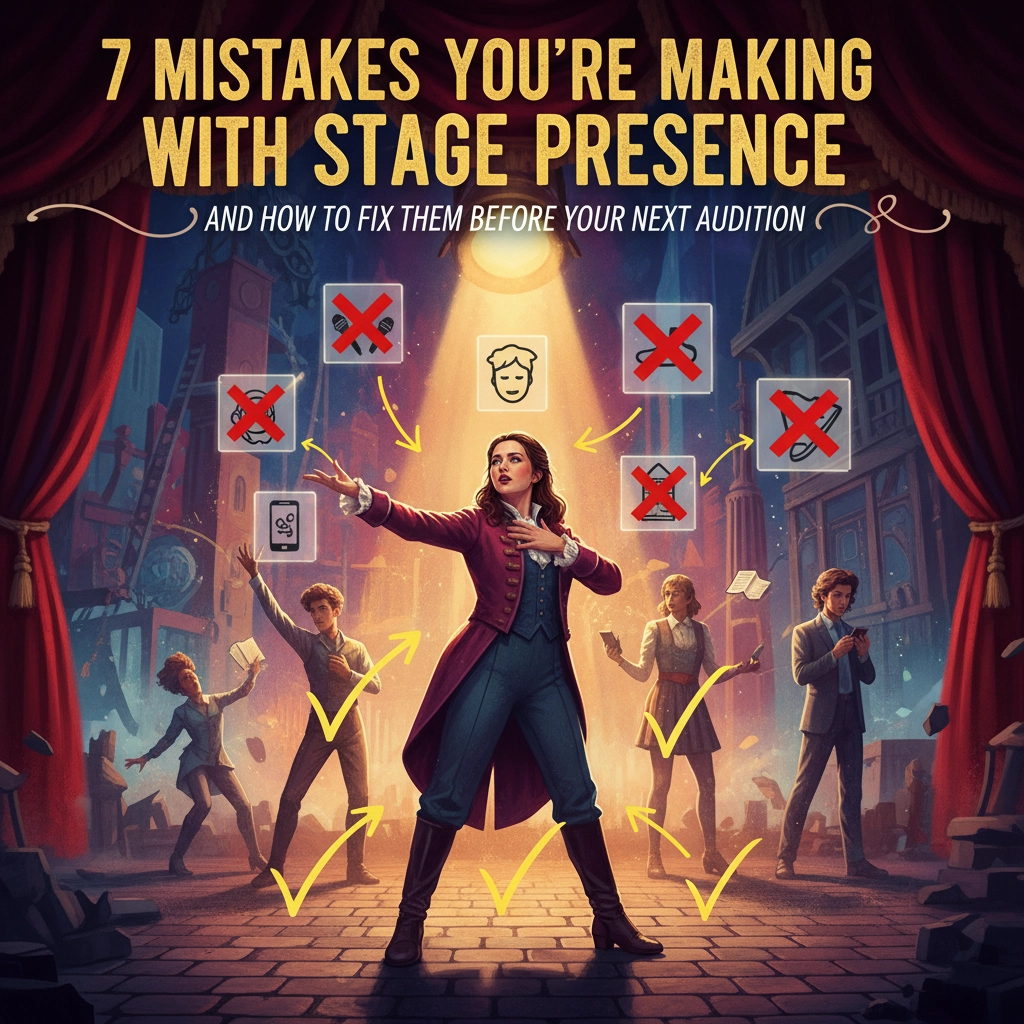
7 Stage Presence Mistakes That Are Ruining Your Auditions (And How to Fix Them Fast)
You’ve practiced the notes.
You’ve memorised the lyrics.
You’ve rehearsed the choreography over and over again.
But then you walk into the audition room… and something still feels off.
The reality is this: most performers don’t lose roles because they “can’t sing.” They lose them because their stage presence doesn’t connect.
Whether you’re preparing for school productions, musical theatre auditions, or professional callbacks, stage presence is often the thing that separates talented performers from unforgettable ones.
If you’ve ever felt stiff, awkward, disconnected, or invisible during an audition, these are the seven most common mistakes that could be holding you back — and exactly how to fix them.
If you're also working on your overall audition preparation, check out these common audition prep mistakes performers make before stepping into the room:
Mistake #1: You Only Start Performing When the Music Starts
What Most Performers Do Wrong
You walk in nervously.
You avoid eye contact.
You mumble your introduction.
Then suddenly — when the backing track starts — you try to “switch on.”
The problem? The audition panel started forming their impression the second you walked through the door.
The Fix
Your performance begins before you sing a single note.
Walk in with grounded energy.
Make eye contact.
Smile naturally.
Introduce yourself clearly and confidently.
One of the easiest ways to improve this is to rehearse your entrance at home. Seriously.
Walk into your room as if you’re entering an audition space. Practice introducing yourself until it feels calm and natural instead of robotic.
For performers chasing bigger musical theatre goals, strong stage presence becomes one of the biggest competitive advantages you can develop:
Mistake #2: Playing Small Because You’re Nervous
What Most Performers Do Wrong
Nerves cause performers to shrink.
Your movements get smaller.
Your voice loses energy.
Your facial expressions disappear.
Instead of performing freely, you focus on “not messing up.”
Unfortunately, this often makes talented performers forgettable.
The Fix
Stop trying to eliminate nerves completely.
Instead, learn how to channel them.
Physical warmups before auditions can dramatically help:
Shake out tension
Do vocal slides
Jump lightly to release adrenaline
Loosen your shoulders and jaw
The goal is not perfection. The goal is connection.
Many singers struggling with stage presence are actually dealing with hidden performance anxiety patterns they haven’t identified yet:
If audition nerves regularly affect your confidence, these confidence hacks for musical theatre singers can also help you feel far more natural on stage:

Mistake #3: Staying Glued to Your Spot
What You're Doing Wrong:
You plant yourself center stage and stay there like a tree. This creates a static, boring performance that doesn't engage the full panel or showcase your ability to command different areas of the stage.
The Fix:
Use the entire space available to you. Take purposeful steps during musical interludes, move closer to the panel during intimate moments, and step back for powerful belting sections. Movement should support your storytelling, not distract from it.
Quick Movement Checklist:
Enter with purpose, not hesitation
Use three different stage positions during your piece
Move during musical interludes, not mid-phrase
End in a different spot than where you started
Mistake #3: Staying Frozen in One Spot
What Most Performers Do Wrong
You stand centre stage the entire song without moving.
This creates a flat performance that feels disconnected and visually repetitive.
Strong performers know how to use space intentionally.
The Fix
Movement should support storytelling.
That doesn’t mean random pacing. It means purposeful movement that matches emotional shifts within the song.
Try:
stepping closer during intimate moments
opening your body during emotional climaxes
shifting position during musical interludes
changing levels and energy throughout the performance
Quick Stage Movement Checklist
Enter confidently
Use at least 2–3 stage positions
Avoid pacing aimlessly
Let movement feel motivated by emotion
Finish in a different place than you started
Many performers underestimate how closely stage movement and storytelling work together in auditions:
Mistake #4: Over-Acting and Over-Singing Everything
What Most Performers Do Wrong
You try to impress the panel with:
huge gestures
excessive vocal runs
dramatic facial expressions
constant intensity
But instead of feeling powerful, the performance starts feeling forced.
The Fix
Focus on emotional truth first.
The strongest musical theatre performances don’t feel “performed.” They feel believable.
Before adding vocal embellishments or dramatic acting choices, ask yourself:
“Does this serve the story… or am I trying to prove I’m talented?”
Authenticity always connects more deeply than over-performing.
This is especially important in modern musical theatre where storytelling and connection matter just as much as vocal ability.
If you want to improve your overall musical theatre performance skills, this guide breaks down some of the biggest mistakes performers make on stage:
Mistake #5: Avoiding Eye Contact
What Most Performers Do Wrong
You stare:
at the back wall
at the floor
above the audition panel’s heads
This creates emotional distance immediately.
The Fix
Eye contact creates connection.
You don’t need to stare intensely at the panel the whole time. Instead:
connect naturally with one person during certain phrases
shift focus as emotions change
allow your eyes to support the storytelling
Good eye contact makes performances feel alive and personal.
Simple Eye Contact Tips
Start by grounding yourself with one friendly face
Avoid darting your eyes rapidly
Don’t overthink equal distribution
Never stare at the floor
Mistake #6: Letting Nervous Body Language Take Over
What Most Performers Do Wrong
Even when your voice sounds great, nervous body language can sabotage the performance.
Common habits include:
swaying
fidgeting
crossed arms
locked knees
hunched shoulders
These unconscious signals make performers appear uncertain.
The Fix
Train confident posture into your rehearsal process.
Practice with:
relaxed shoulders
grounded feet
open chest posture
calm, intentional gestures
One of the best tools? Record yourself rehearsing.
You’ll often spot nervous habits you didn’t even realise you had.
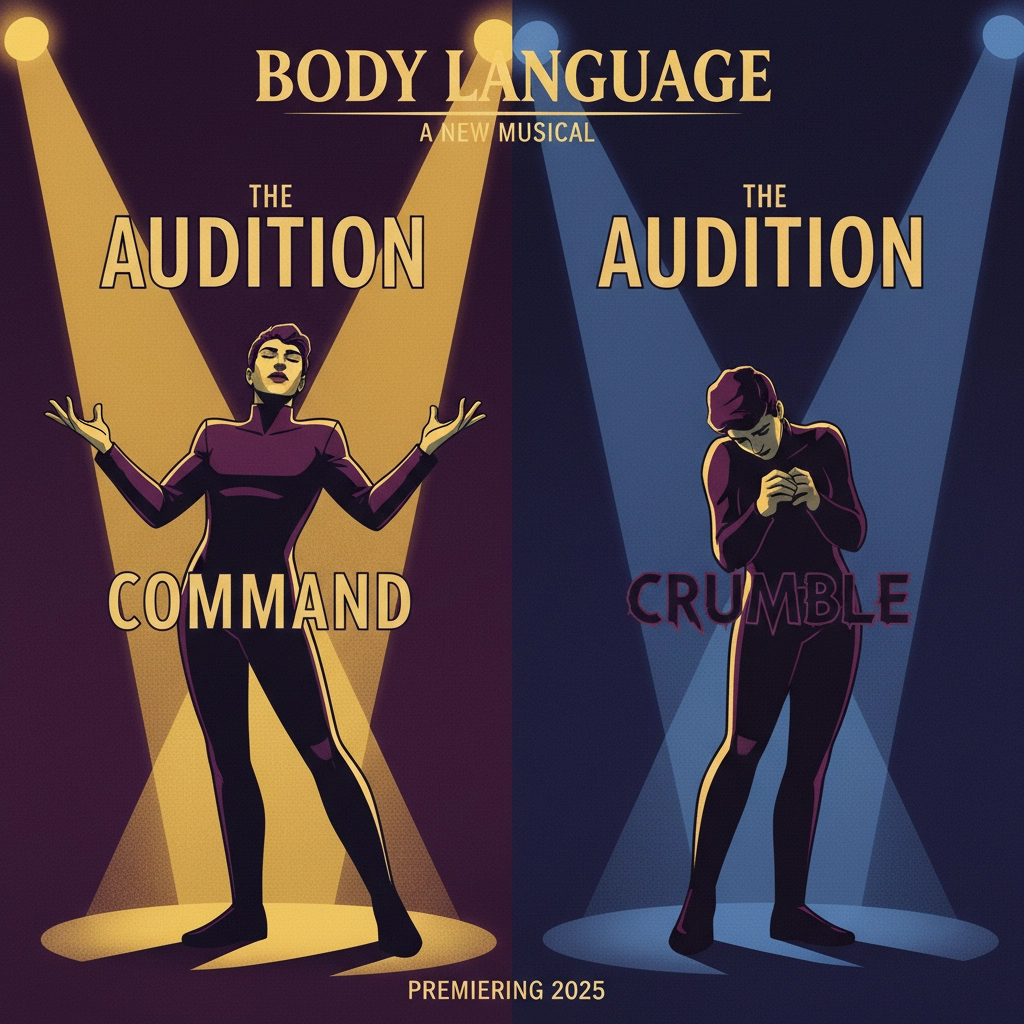
Mistake #7: Falling Apart Between Songs
What Most Performers Do Wrong
You finish singing… then suddenly become awkward.
You stop making eye contact.
You lose energy.
You give rushed answers.
But auditions are not just about singing ability. Panels are also assessing professionalism, confidence, and personality.
The Fix
Prepare for the full audition experience.
Practice:
introducing yourself
saying thank you naturally
answering simple questions confidently
transitioning calmly in and out of performances
The performers who book roles consistently are often the ones who feel easiest to direct and work with in the room.
If you’re preparing for major musical theatre callbacks, this audition prep guide can help you feel far more prepared walking into the room:
Your Stage Presence Action Plan
Ready to fix these mistakes before your next audition? Here's your step-by-step checklist:
This Week:
Record yourself performing your audition pieces
Watch for the mistakes above
Practice your entrance and exit
Work on eye contact with family or friends
Next Week:
Do a full mock audition with someone you trust
Focus on one mistake at a time during practice
Get comfortable with purposeful movement
Practice the "between songs" conversation
The Day Before:
Do physical warm-ups to channel nervous energy
Visualize your successful performance
Practice your introduction one more time
Get enough sleep and stay hydrated
FAQ
Q: What if I make a mistake during my audition?
A: Pause, breathe, and continue. How you handle mistakes shows professionalism and grace under pressure. Don't apologize or draw attention to small errors – the panel might not have even noticed.
Q: How do I know if I'm moving too much or too little on stage?
A: Movement should feel natural and support your storytelling. If you're thinking about it while performing, you're probably overthinking it. Practice until your staging feels as natural as your lyrics.
Q: Should I look at all the panel members equally?
A: No need to divide your attention mathematically. Focus on connecting authentically with individuals as the song's emotion guides you. Natural eye contact trumps calculated distribution every time.
Ready to Master Your Stage Presence?
These seven mistakes are costing you roles, but they're completely fixable with the right guidance and practice. If you're serious about improving your musical theatre auditions and want personalized coaching that addresses your specific stage presence challenges, book a free assessment with an experienced vocal coach in Brisbane.
During your assessment, we'll identify exactly which of these mistakes you're making and create a customized plan to eliminate them before your next big audition. Whether you're preparing for school productions, community theatre, or professional auditions, the right coaching can transform your stage presence from uncertain to magnetic.
Your talent deserves to be seen. Let's make sure nothing stands in its way.
Start commanding the stage with confidence.
Brisbane students click here: https://brisbanesinginglessons.com/
Gold Coast students click here: https://goldcoastsinginglessons.com.au/
URL Slug: stage-presence-mistakes-audition-fixes-brisbane
